Monday, October 3, 2016

Duck river mussels with Nature Conservancy of TN. -by Kayla M.

      The 9th grade Tucker River Fellows went to the Duck River where we kayaked down the Duck river. In this river there are many different types of Mussels. While we were there we looked for mussels at bottom of the river. 

Many of these freshwater mussels have funny names like the Spike, Bird Wing (an endangered species), Rock Pocketbook and many others. The Duck River has over 50 fresh water mussels and has the most diverse freshwater population in North America. It is also where ¼ of a million people get there drinking water from and also where five counties put their treated waste water.


       When we where there, we meet Emma Williams GPS class of 92’ who owns a communications company and is on the board for the Nature conservancy (TNC). We also meet Rob Bullard who is the Tennessee Cumberland River programs director for TNC, Sally Palmer who is a TNC ecologist and who helped us identify many of the mussels and Cory who works with agricultural practices for TNC.  


Thursday, September 22, 2016

Serve and Protect Luncheon- by Sarah F.


On Thursday September 15, the Tucker River Fellows attended TNACI’s annual Serve and Protect Luncheon. The Serve and Protect Luncheon was created to inform people of the Tennessee River and how the type of sea life we eat affects the freshwater food web. 


During the cooking show the River Fellows learned how to create dishes using catfish, crawfish, and squid from two chefs. While learning how to prepare these incredible smelling dishes we were able to enjoy an amazing lunch! It was an incredible experience learning how you can better the environment by just eating a certain dish.

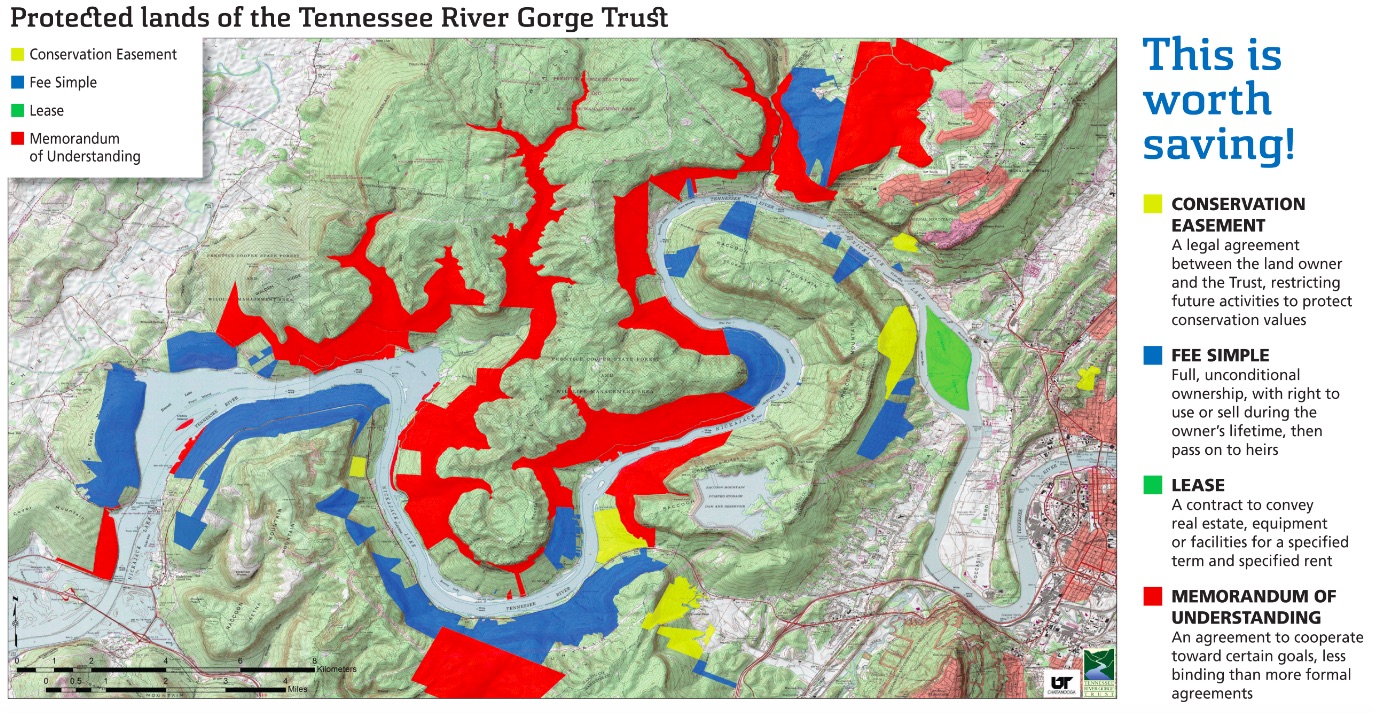
Lunch and Learn with the Tennessee River Gorge Trust By Erin M.

On Wednesday, August 31, the ninth grade River Fellows attended a Tennessee River
Gorge Trust luncheon. The purpose of this luncheon was to educate people about the River
Gorge Trust and what they do. The River Gorge Trust is a nonprofit organization with the goal of
preserving and protecting the Tennessee River Gorge. They buy land along the river gorge or
ask the land owner for rights for the land, so it won’t get developed and can be used by the
public for recreation.

There are several steps that must be taken for the River Gorge Trust to be able to have
and use this land. The first is acquisition, or buying the land. The Trust is able to purchase land
through donations made to the organization. Step two is stewardship of the land. The Trust is
fervent about making sure the land is healthy and that animals are getting all of the nutrients
that they need to continue breeding and populating the forest. Then, the land is used for public
recreation, such as kayaking, canoeing, and hiking. The land is also used for educational

purposes, like teaching the students of Tyner Middle School about nature.

Sunday, June 26, 2016

Seine Fishing in the South Chickamauga Creek – by Erin M


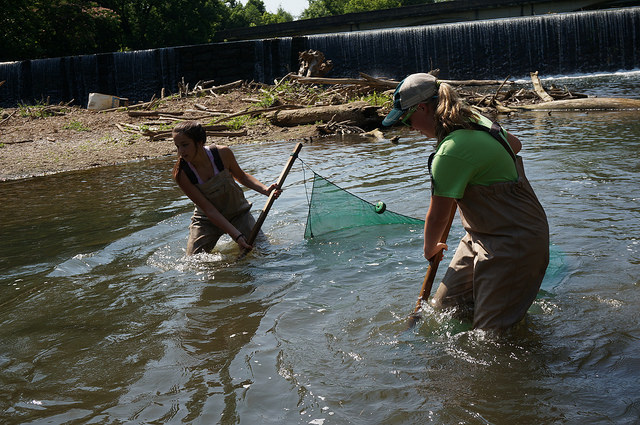
The 9th grade River Fellows went seine fishing in the South Chickamauga Creek. Seine fishing is a method of fishing using a net. The net is weighted at the bottom with lead weights and the top is buoyed by floats. Two people hold wooden poles on the sides of the net and use either the “haul” method or the “set and kick” method to capture fish. The “haul” method is when both people walk downstream at a fast pace, keeping the net behind them and the poles at a 45 degree angle. The “set and kick” method is when the people on either end of the net hold the poles at a 45 degree angle. Then, other people walk towards the net, kicking up rocks on the bottom to scare fish into the net. Before going to the creek where we would fish, we went to meet the scientists who would take us fishing at a warehouse that was being used to raise sturgeon and Appalachian brook trout. We were able to see fingerling sturgeon, which were about an inch and a half long, some brook trout, and the head of a seven and a half foot long arapaima that’s scull was being eaten by beetles so scientists could have its skeleton to study or display.
Downstream haul

Scientists from the Tennessee Aquarium took us to the South Chickamauga Creek to fish. Upon arrival we met the landowner’s German Shepard, Bella, who waded in the creek near us as we fished. We began fishing in slower moving water and slowly moved downstream into faster

water. Mainly we caught smaller fish such as darters and minnows. The species of fish we caught were surprisingly bright and colorful such as redline darters, war paint shiners and banded darters, but also caught more camouflaged fish such as sculpins, log perch and the threatened snail darter which was the first species to take the Endangered Species Act to court. Other creatures were also caught in the nets: a dragonfly larva, a hellgrammite (Dobson fly larva), a musk turtle and many crawfish. 


hellgrammite (dobsonfly larvae)

Later on we moved upstream to a large pool area and started trying to catch larger fish. We then caught a long nose gar and a buffalo sucker.

gar in mid-air

buffalo


At the end of the day we were wet and our waders were full of water but we learned a lot about the creek and the many species of fish and other aquatic life in it! 

Monday, June 20, 2016

Chickamauga Dam and GIS by Isabelle T. and Sarah F.

Chickamauga Dam Tour 

Today the freshmen Tucker River fellows toured the Chickamauga Dam on the Tennessee River. We got to explore things like turbines, locks, and even went 80 feet under headwater! 


At the beginning of the day, we got a generalization about how the water flows through the dam to create energy. The turbine converts the kinetic energy of water into mechanical energy. A generator then converts this mechanical energy into electrical energy. We were able to go inside the turbine and see the water being spun.
Next we took a tour of the outside of the dam. We walked along the construction and saw the differing sides of the river.

While walking along the concrete, a barge approached and we watched it go through the lock. The barge had to split into two sections because the lock is too small, so they are building a new system. We watched the water level between the two locks lower so the lock could open and let the barge through.
After that, we went to look at the generators. These generate energy and make the hydroelectric power.
We then proceeded to the elevator where we went 80 feet below the headwater into a cave-like passage that held some of the controls and oil storage rooms.
During this tour, we saw many things that expanded our knowledge of the water and how it is generated. We learned how a turbine creates energy, where the river trash is disposed through a gate, and even things such as the level of humidity in the dam! This was a great experience all-around, and we can’t wait for more!

Learning about GIS

On Wednesday after an interesting tour of the Chickamauga Dam the freshmen Tucker River Fellows went to UTC to learn about Geographic Information System (GIS). Andy Carol helped navigate us through this college-level topic. He helped simplifying GIS through a straightforward tutorial. We learned to use GIS on an app called GIS Collector.

link to water trails: TN water trails


 GIS is a resourceful tool that can be used on a day to day basis. We were able to play around with the app after the lecture and tutorial. We were able to learn much about the Chattanooga area; everything from the amount of people that tweet in an area to what is the best route to take when kayaking down the Hiwassee River. Over all GIS was a very engaging topic that we all loved to learn about!