We began our Friday by doing journal entries that prompted us to question what we had learned, how we had grown, and what we could explore next. It was a great way for us to reflect and share our thoughts on our Tucker River Fellows experience so far. We then got on the bus to head to the Conasauga River, which is a little over an hour away. During our bus drive, we stopped to see a wetland because we had been learning about them throughout the week. We saw a Red Winged Blackbird at the wetland, which gave us an example of an animal that lives there. It was a great way for us to visualize a wetland and understand more about its purpose for us and our environment. After seeing the wetland, we got back on the bus to finish our ride. The end of the drive was a bit bumpy, but we made it and were excited to start snorkeling! The water was clear and the scenery around it was beautiful. We wanted to get into the water as soon as possible, so we changed into our wetsuits quickly. Once we suited up and got an understanding of how snorkels work, we were ready to dive under. We started downstream and slowly swam upstream. In the water, there were many different species of fish, including darters, hog suckers, log perch, and minnows. We were very happy to see this specific log perch because it isn’t found anywhere else in the U.S. The majority of the fish were small, but we did see some bigger sized fish in the deeper waters. We spent so much time in the water, so we had a late lunch and then looked at some insects in the water, such as mayflies and stoneflies hiding under rocks. After looking at these insects, we got dressed and prepared to leave. When we were ready to go, we hopped on the bus and ended our day’s adventure on the ride home.
Friday, September 10, 2021


Wednesday, September 8, 2021
Seining in South Chickamauga Creek with TNACI (and a physics lesson!) By Abbey C.
We started off our adventure full Thursday by meeting in the River fellows room and getting a physics lesson from Mr. Haynes about polarized glasses. Then we got on the bus and started our journey to Chickamauga creek to meet with the aquarium to go seine fishing. Once we reached our destination we met Dr. George and David and started getting all our waders on and got a demonstration of how to catch the fish with the seine.


After we finished seine we ate out by the creek and then journaled what species we caught and identified. After that we loaded back up on the bus and headed to Camp Jordan to meet with Ms. Kurtz who is a part of the South Chickamauga Creek Greenway Alliance (SCCGA) where she talked to us about what is really going on in our community and the environment and how we can speak up for change in the environment by having data and laws to do what is right for the community.


Afterwards we went back to GPS where we did some debriefing and talked about what we learned and what observations we had made through the day.
Thursday, September 2, 2021
Wastewater treatment and Gyotaku (fish print art) by Blythe L.
On day 3 of our summer week, the River Fellows had the eye-opening experience of touring one of the more uncelebrated facilities in Chattanooga. Crucial to the very existence of Chattanooga as a city, the Moccasin Bend Wastewater Treatment Plant is responsible for keeping the river healthy and clean, taking care of our sewage and rain runoff, and producing biosolids that are useful to non-food crops. Without the hard-working staff at Moccasin Bend, none of us would be able to live in such close proximity and Chattanooga as we know it would not exist.
While advanced technology may not be the first thing that comes to mind when you think of wastewater, the way the plant treats their water employs fascinating mechanical, biological and chemical processes. As we arrived, we were welcomed by our tour guides: engineering coordinator Chris Mills and sewer project coordinators Leah Sergeant and Sean Kidd.
The River Fellows, looking into a tank held open by Mr. Mills

We then proceeded along the journey untreated wastewater takes as it passes through the plant, and learned of the mechanical rakes that remove rocks and other debris, the bacteria that attack harmful viruses, and the strong bleach used to treat the wastewater before it is neutralized and sent into the river.
The Tucker River Fellows at the detritors (mechanical rakes and screens that filter wastewater)

Mr. Mills explains the large holding pool behind him to the River Fellows.

Finally, we stopped to take a photo above the point where the treated effluent is released carefully back into the river. At this point, it is slightly cleaner than the river water!
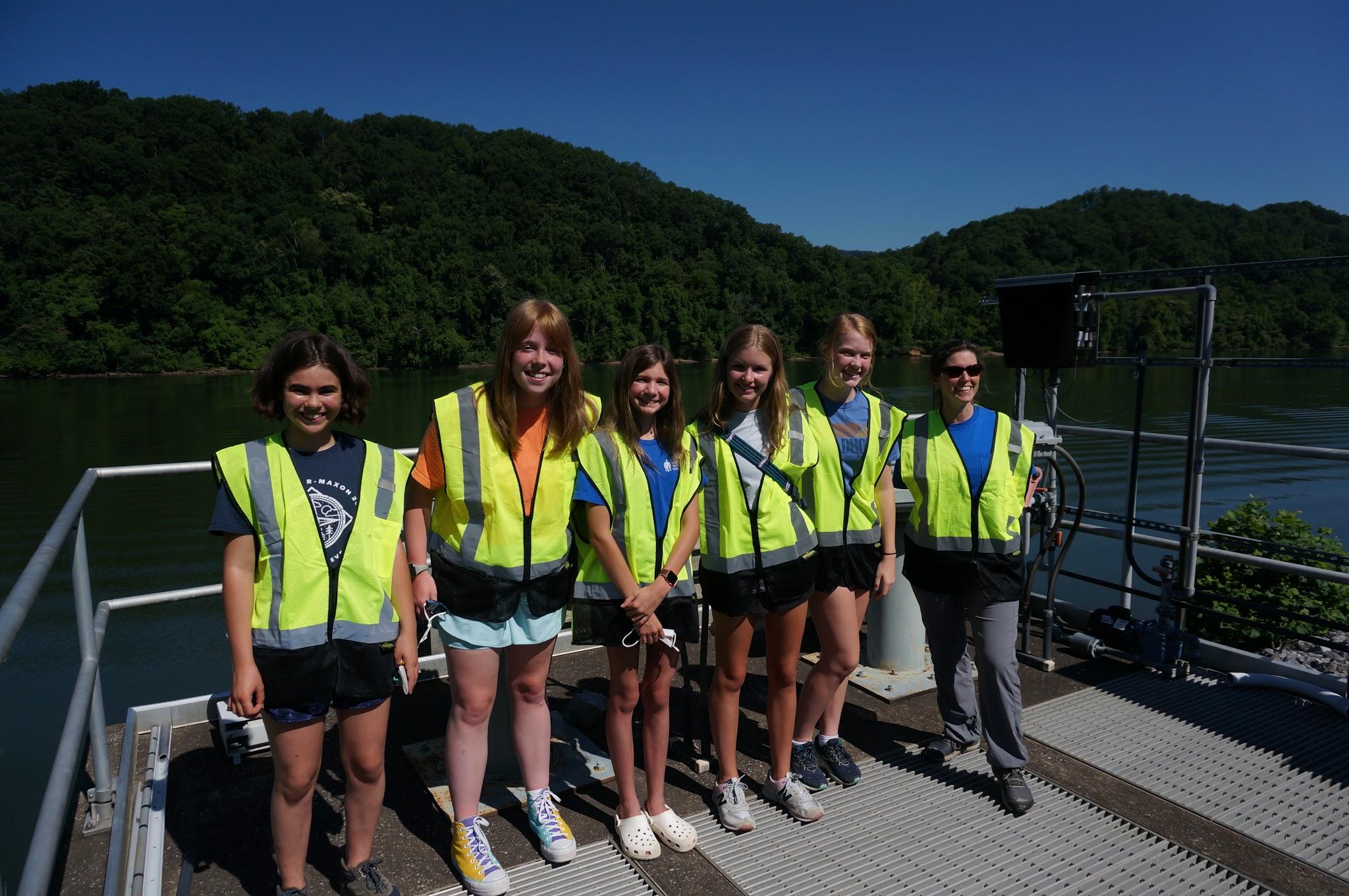
The Fellows standing above the release point.
Throughout the tour, we learned of the different ways Moccasin Bend takes action to help protect the river and the environment: monitoring the water to ensure the river is healthy; drawing approximately 12% of their power from their ten acres of solar panels; and even being a top contender for Chattanooga’s #1 recycler - only the garbage found is put into landfills, while all organic material is turned into biosolids, saving 70,000 tons a year!
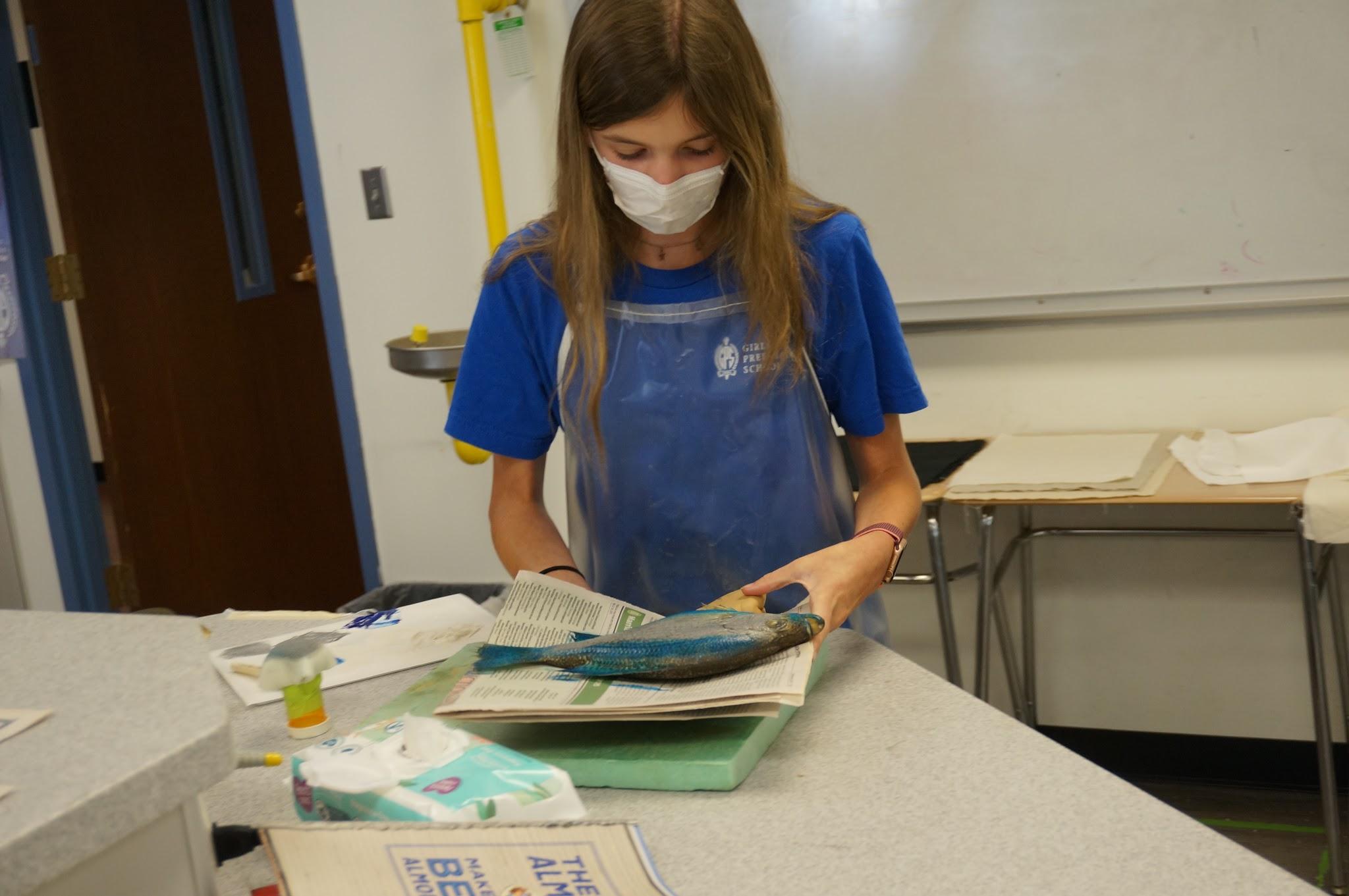
After the tour, our group headed back to GPS for lunch and a Gyotaku art session with local artist Mark Monahan. Gyotaku dates back to ancient Japan, when fishermen would use ink and paper to record their catches quickly and accurately. We used water-based paints and fabric for our own prints. To make each print, we prepared a real, once-alive fish by washing it carefully, and readied a palette of paint.
River fellows wash fish in preparation for their prints.
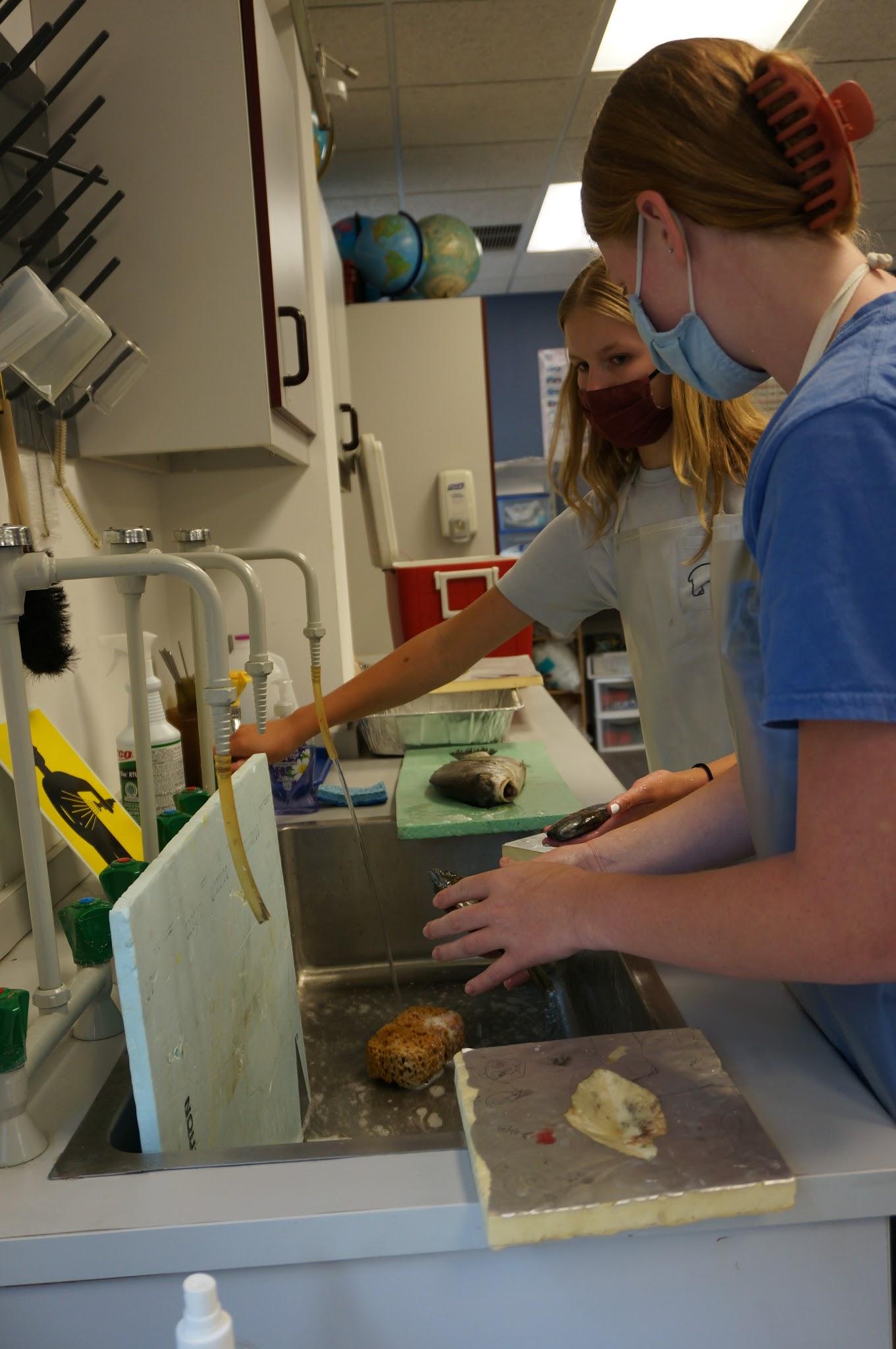
Mr. Monahan shows a river fellow how to prepare a palette.

Then, we carefully painted over its scales and fins with special foam tools. Blank fabric was laid down over the fish, and slowly pressed down on each part of the body. Finally, it was lifted for the reveal!

A fish next to a finished print.
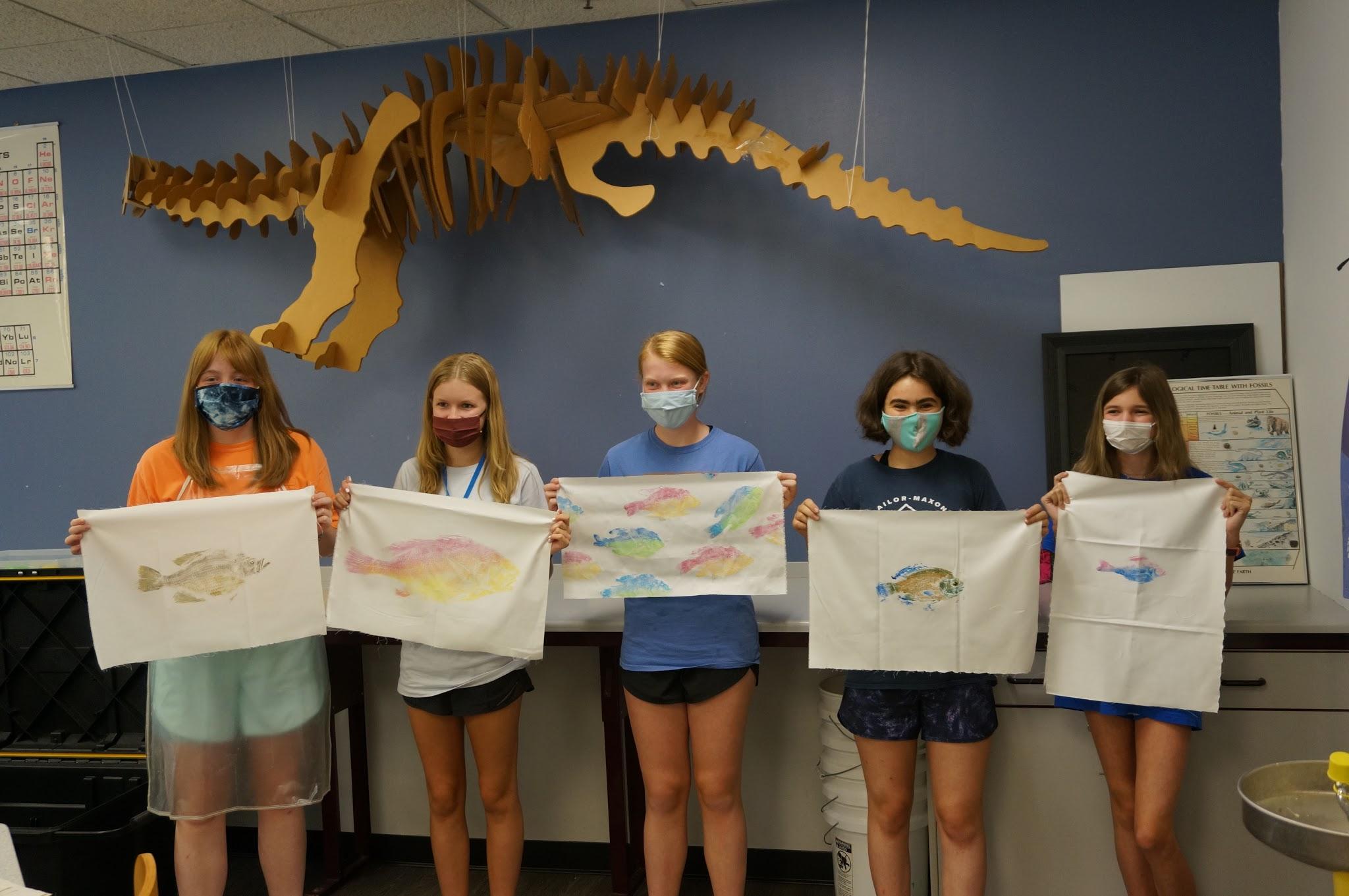
Among the fascinating fish used were a drum, bluegill, bass and a trickily three-dimensional catfish!
River Fellows hard at work!

Each of us departed with t-shirts from Mr. Monahan’s online shop, The Mighty Bluegill; a new understanding and appreciation of fish; and several unique gyotaku prints to share with our families.
The fantastic finished Gyotaku fish prints!
Wednesday, September 1, 2021
TN River gorge kayaking- day 2 by Kendall O.
The second day of the River Fellows kayaking excursion started out early in the morning. We woke up and packed our things to prepare for the kayaking trip to the take out. For breakfast the Outdoor Chattanooga guides, Terri Chapin and Aerial, fixed a delicious french toast casserole and scrambled eggs. After we ate, we headed out on the water. Not far into our kayaking journey, we spotted a white tailed deer.

It was amazing to come back to the classroom and reflect on all the wildlife we had seen on this kayaking trip. After 4 miles of kayaking we arrived at the take out. We helped each other lift our kayaks out of the water and then it was time for lunch. We ate our lunch on the dock looking out on the beautiful view of the river. Following lunch we loaded up the van and drove back to GPS. When we arrived at GPS we were exhausted from the trip so we took a little break to relax and get ready for our next activity. Next we were going to go learn about TVA archeology. There were two TVA archeologists coming to talk about their job, which many of us were curious to learn about since we didn’t know what it was. TVA archaeologists work to preserve artifacts and archeological sites, and to educate others on what to do when they encounter an artifact. After we listened to the archeologists share information about their job they brought an artifact that Native Americans used to use for hunting. It was called an atlatl.

The atlatl was basically used as an extension of your arm so that you could throw spears farther. We are so thankful to the TVA archeologists and our Outdoor Chattanooga guides for an amazing experience!
Tuesday, August 31, 2021
Kayaking Tennessee River Gorge- day 1 by Ella Beth W.
For the first day of our river fellows week of exploring, we set out on a two day kayaking trip. In the morning we started off with some ice breakers as well as a few exercises to gauge where we were in terms of knowledge about the river. We had a brief presentation on what a watershed is and how it affects our river system , and then we loaded our things onto the bus for our adventure. After a short bus ride to the put-in, we walked around the parking lot and learned about some organizations that help keep the river clean. One organization we learned about was Green Steps, which helps encourage citizens to keep trash out of the river and nature by offering incentives for cleaning, such as Amazon dollars ( one amazon dollar per bag of trash collected). Finally, after a short lunch we got in the river and started our trip.


Wednesday, October 7, 2020
Seine Fishing with TNACI Scientists- by Sawyer & Scout
Seine Fishing With TNACI Scientists
After our arrival at GPS in early August, we immediately got on the bus to go seine fishing. Seine fishing is a type of fishing using a giant net with floats on the top, and lead weights to sink the bottom half of the seine to the bottom of the creek. After the seine net is in the water a person on each side of the net drags the net through the water to capture fish inside of the net. The second way to use the seine is to hold it in place and have people kick up the rocks and the fish around the rocks are forced into the net.


The scientists use the seine fishing method to inventory the fish and water life populations to see how healthy the water source is. They also take a few animals back to TNACI to be hosts for endangered mussels and to use as brood stock.
When we got back to GPS we ate our lunch and shared our findings about the day. We learned that this year was the first year in 6 years that had found Hog Suckers and a couple years ago the River Fellows group found Gar, which is a large fish with a long snout. We found that each year the river fellows group went seine fishing, different species of fish we found. This means that the creek we went to has diverse species of fish.
Thursday, September 3, 2020
Watersheds and tributaries by Lavender K. and Ella H.
On Wednesday, August 5, the freshmen River Fellows learned about the importance of watersheds. A watershed is surrounding land that drains rainwater into a larger body or stream. Mrs. Couch demonstrated that these areas often funnel pollutants like oil, large amounts of loose sediment, excrement, fertilizer, and pesticides into waterways, directly affecting the health of ecosystems and animals alike.
When chemicals and excess amounts of soil are dumped into the river, crucial parts of the food chain like insect larvae are poisoned or smothered, losing their homes. Other animals like small fish no longer have a reliable food source, creating a chain reaction known as a trophic cascade.
To prevent this pollution, construction companies use silt fences when excavating large amounts of sediment. These barriers hold dirt in place and prevent it from sliding into bodies of water. Another method environmental engineers use is a constructed wetland, areas that both clean and soak up rainwater with nature's most effective filter, plants. The River Fellows have encountered these amazing spaces at both TNACI and later on around the RiverWalk.

After learning about watersheds, the tucker river fellows got the opportunity to visit different water sources across Chattanooga. Visiting four areas in total, each river fellow took notes and recorded their observations about each place.
The first water source they visited was Citico creek, this area did not look extremely healthy. The water was almost stagnant and the water level was very low. The bridge overhead the area was keeping plant life away due to the lack of sunlight. There was lots of litter strewn across the bank. While the area was not extremely well kept, the bank did have a silt fence that the river fellows learned is one way the city can help keep the watershed healthy! However, part of the silt fence had fallen down, allowing silt and dirt into the creek.
The second water source that the fellows visited was at the mouth of the citico creek where it emptied into the Tennessee river. The area had more plant and animal life. There was a man-made rock bank preventing erosion, and almost no litter. Further out on the river, the fellows observed one of the main water sources of Chattanooga.

The next place was South Chickamauga Creek. The area looked very healthy with lots of wildlife and plant life including butterflies, cicadas, crickets, dragonflies, varieties of fish, rivercane and english ivy (invasive). The water was relatively placid, and emptied out into the Tennessee river.
One of the last places the fellows visited was the Tennessee River Dam. The dam is hydroelectric and operated by TVA. There was a drastic difference in the water level on each side of the dam. This is because while the dam is closed, the water builds up on one side and when the dam opens the water flows through and turns turbines inside the dam, generating power!
